

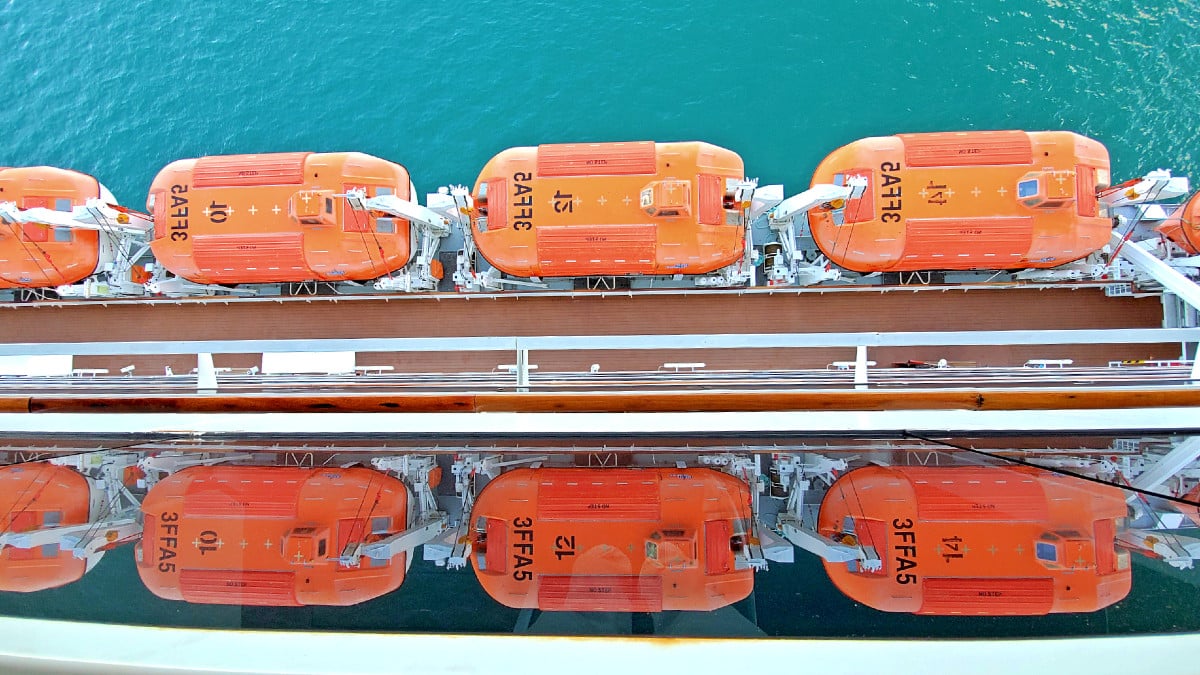
Lifeboats on cruise ships have come a long way in the last 25 years. In fact, modern safety features across the board have made huge strides that most people don’t even know about.
After all, when you’re on a cruise ship enjoying an amazing vacation at sea, who really thinks about worst-case scenarios?
Most passengers are more concerned about a potential view being blocked by a lifeboat hanging off the side of the ship rather than what those bright boats actually do.
And yes, the internet is chock full of fear-mongering articles about lifeboats. Some claim there aren’t enough for everyone. Others use clickbait YouTube thumbnails that make would-be first-time cruisers hesitant to hop on board.
Here’s the good news: cruise ships are built with safety as the top priority. Instead of dwelling on worst-case scenarios, let’s dive into the fascinating world of cruise ship lifeboats.
One of the first things you should do when you board your cruise ship is to find your muster station so you can complete the required e-muster drill before the ship leaves port.
Hopefully, these fun facts will help make that entire muster drill experience more interesting.
Here are 10 surprising facts you might not know, from hidden features to rigorous testing procedures.
1. Some lifeboats are used as tenders
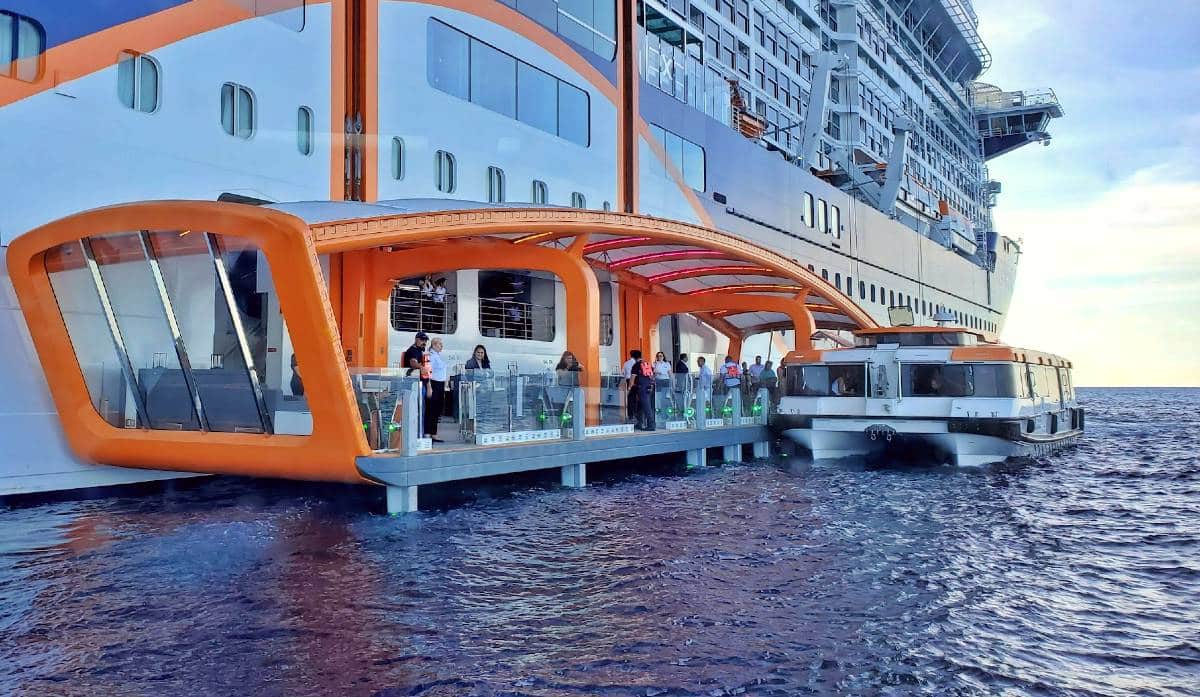
A tender is a boat that takes cruise passengers back and forth from ship to shore. These are used in ports of call where the ship cannot dock and must drop anchor offshore.
I’ve had the chance to ride in a lifeboat tender many times. In fact, on a recent cruise with Celebrity Ascent, the co-captains (the Kafetzis brothers) even had a little race alongside the ship as Celebrity debuted its brand-new vessel.
And yes, those boats can move faster than you think.
That’s not something the average cruiser gets to experience often, but it gave me real insight into what these life-savers are capable of.
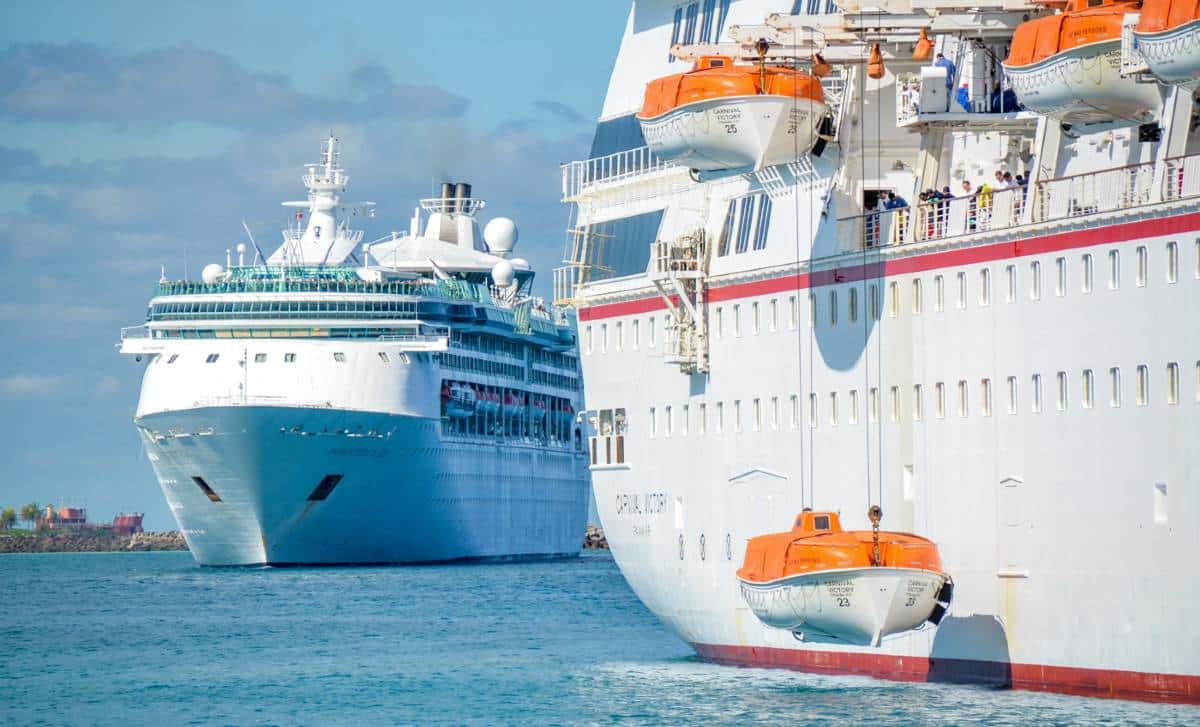
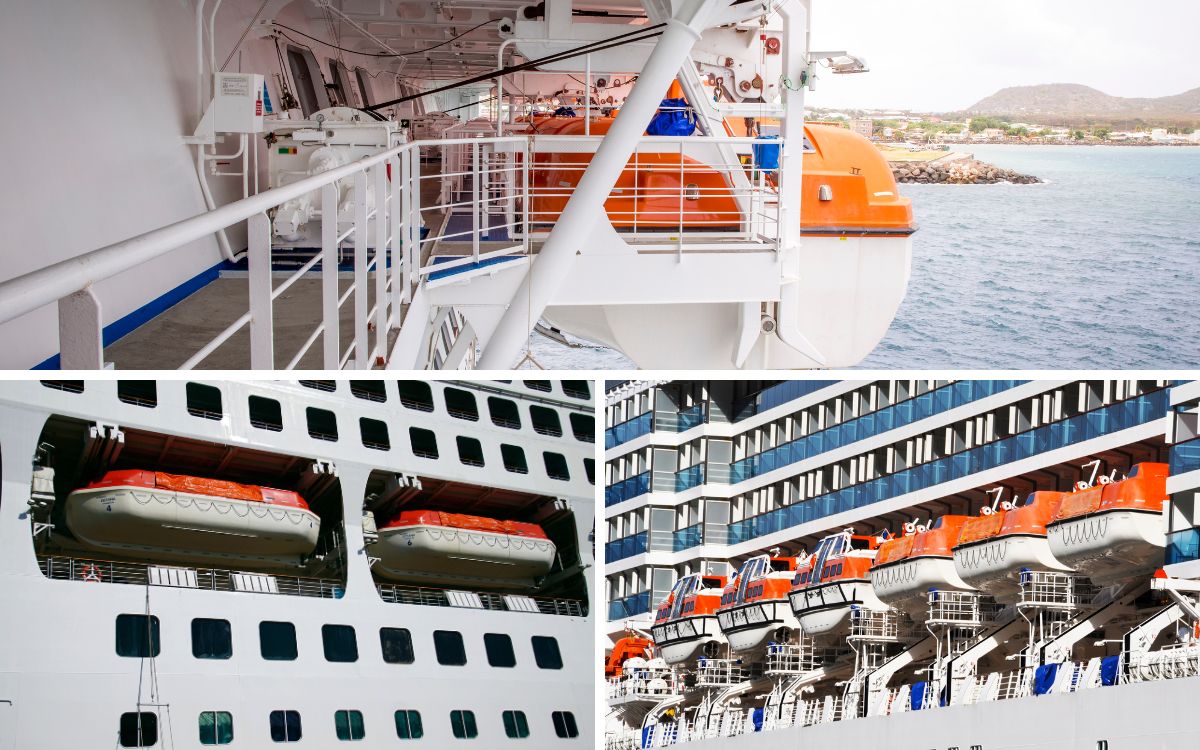
Lifeboats that you see hanging off the side of the ship with no windows along the full length are usually not the tender ones. Tender lifeboats tend to be more spacious and often feature padded seating on some cruise lines.
Of course, in a true emergency, these vessels will be filled closer to maximum capacity and will feel much more cramped.
2. The capacity of lifeboats has changed
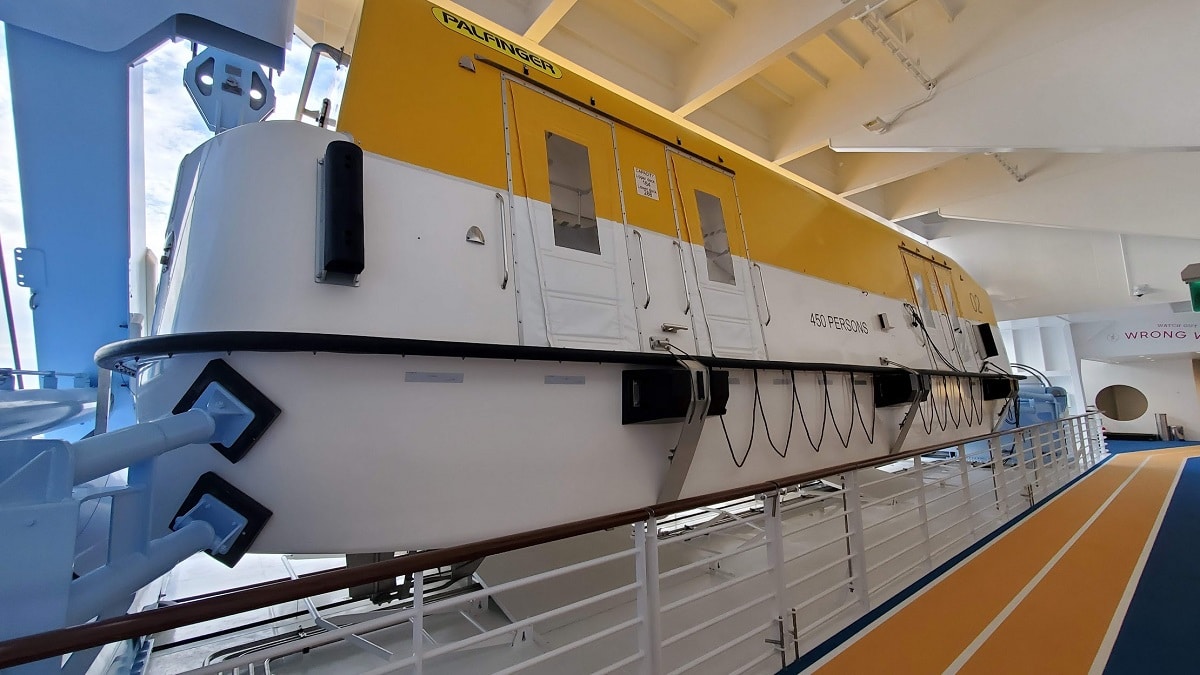
How many people can fit in a lifeboat? That number has evolved over the years.
The traditional 150-person capacity was set by the IMO (International Maritime Organization) in the SOLAS (Safety of Life at Sea) code. Many lifeboats on today’s modern cruise ships now hold 300–450 people.
With massive vessels like Royal Caribbean’s Icon-class ships pushing passenger capacities well over 5,000 (and total onboard numbers nearing 8,000 with crew), even larger “mega” lifeboats have been introduced. Icon of the Seas, for example, carries lifeboats with a capacity of 450 people each.
3. There are enough lifeboats and life rafts for EVERYONE
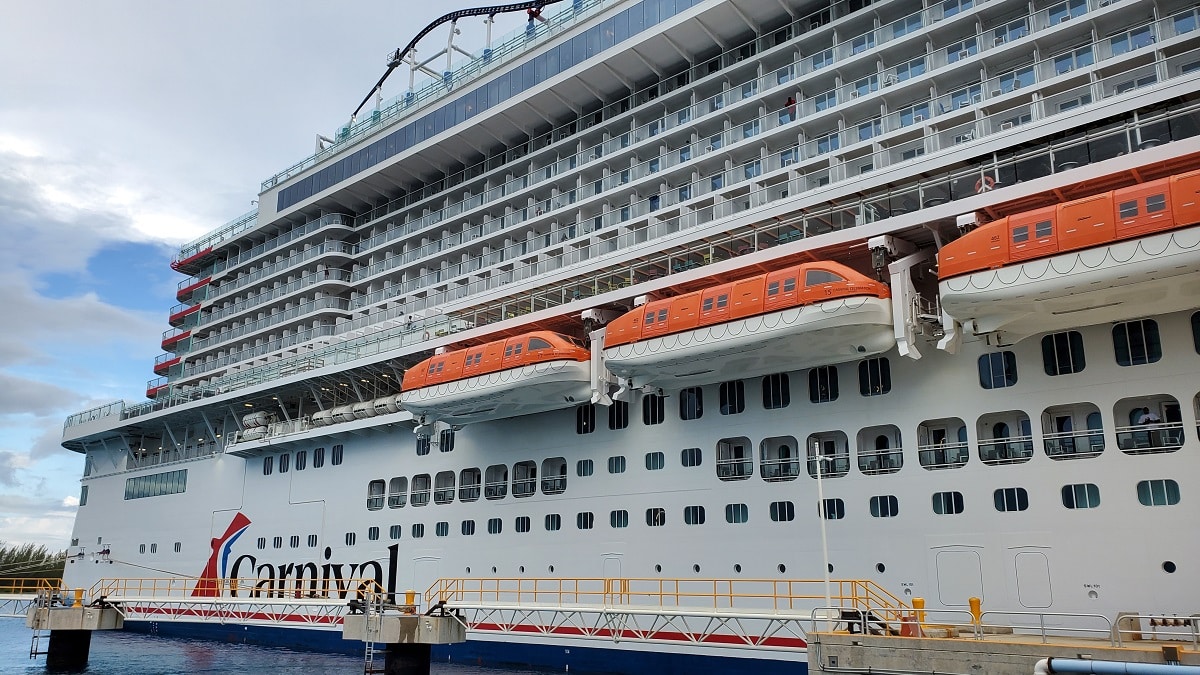
This really shouldn’t be a surprise, but certain headlines on social media love to claim otherwise.
Clickbait articles often say “there aren’t enough lifeboats for everyone” on a cruise ship. If you’re doing the math at absolute maximum capacity, you might start to worry.
But this overlooks key facts.
First, cruise ships rarely sail at true maximum capacity (every berth filled, including third and fourth passengers in a cabin). Most sail closer to double occupancy.
Second, while lifeboats cover the majority of passengers, there are also inflatable life rafts on board. SOLAS requires lifeboats for at least 75% of the total (37.5% on each side), with life rafts making up the difference so that combined capacity covers 100% — often with extra reserve.
These life rafts are stored in circular drums and use a hydrostatic release system that automatically inflates when they hit the water. They’re primarily designated for crew but provide additional space if needed.
Note: Each lifeboat also includes trained crew members (typically 10–18 depending on size) to assist passengers with supplies, food, and organization.
Read more: Top 5 cruise lines with the most capacity (total berths)
4. The color of some lifeboats has changed
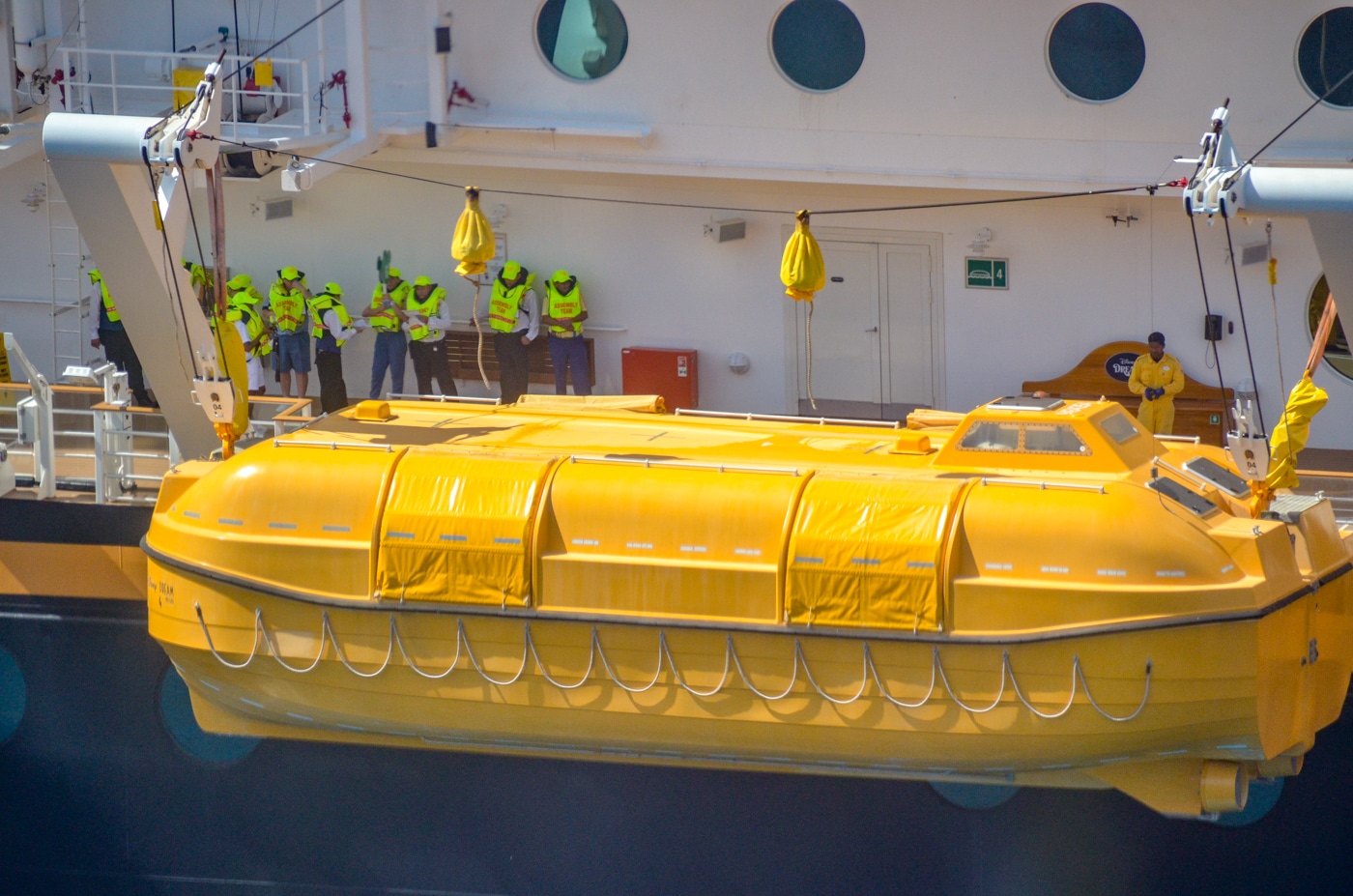
Historically, lifeboats have been bright orange to make them highly visible in the open ocean.
But Disney Cruise Line wanted something that better matched their brand. With approval from maritime authorities, they painted their lifeboats a cheerful yellow, affectionately known as Pantone 99, the same shade as Mickey’s shoes.
Royal Caribbean has since adopted yellow lifeboats on most of its newer ships (except Vision and Sovereign-class), and Costa Cruises also uses yellow.
5. Lifeboats can be launched even with a 20-degree listing
It’s critical that lifeboats can be launched in challenging conditions. A 20-degree tilt is significant for such a large vessel, yet most modern cruise ships can still safely deploy their life-saving craft.
Special davit systems, adjustable hooks, and self-righting designs allow the boats to be lowered and to bob upright once in the water.
Video tour of cruise ship lifeboat
6. All aspects of these boats are tested regularly
Before installation, lifeboats undergo rigorous testing, including loading with weights to simulate passengers and checking performance under various conditions.
If you’ve cruised often, you’ve likely seen crew taking a lifeboat or two out while in port. This isn’t a joyride. It’s to verify engines, seaworthiness, and systems.
Weekly and monthly inspections are standard. Life rafts (sealed in drums) are periodically sent ashore for professional servicing. Food rations, batteries, flares, and first-aid kits are all checked to ensure they’re ready if ever needed.
7. Each boat has an assigned commander who drives
Not just anyone can operate a lifeboat. It requires specialized certification with classroom training, exams, and hands-on water drills.
The designated boat commander is usually assigned based on their shipboard role, with a second-in-command ready as backup. Separate launch teams handle the davits and lowering process.
All of this training happens behind the scenes so passengers can focus on enjoying their vacation.
8. There’s enough food and water for at least a week
The goal in any emergency is rapid rescue. But lifeboats carry enough fresh water and high-calorie rations (like long-shelf-life biscuits) to sustain everyone for at least a week if needed.
It’s not main dining room fare, but it’s designed purely for survival.
Read more: 10 biggest things that can ruin your cruise if you let them
9. Seasickness medication is available on lifeboats
Cruise ships are incredibly stable, but lifeboats bob more noticeably in waves. That’s why every lifeboat stocks motion sickness medication for all occupants, plus sick bags.
What other kinds of equipment and essentials can be found in a lifeboat?
- Fishing tackle
- Sea anchor
- Thermal protective blankets
- First-aid kit
- Can opener
- Rope and rope ladder
- Smoke floats
- Rockets and hand flares
- Compass
- Fire extinguishers
- Flashlight and batteries
Read more: 35 genius cruise items on Amazon for under $15 (mostly)
10. Some lifeboats have bathrooms
People often wonder if cruise ship lifeboats have toilets. Historically the answer was no, but some modern large-capacity lifeboats (like those on Oasis-class ships) do include one.
Remember, these are survival vessels first and foremost, not luxury tenders. But even a basic facility is better than nothing in an extended situation.
Final Thoughts
We all hope no one ever needs to use a lifeboat in a real emergency. But knowing the thoughtful engineering, rigorous testing, and crew training behind them can give you extra peace of mind while you enjoy everything else a cruise has to offer.
You can rest easy knowing there’s more than enough lifeboat and life raft capacity for everyone on board and that the crew stays on top of keeping it all in perfect working order.
Read more: 15 DUMB things people still believe about cruise ships
Looking for the Best Cruise Deals?
Search Multiple Sites at Once
Instant Real Time Pricing
Search Now