


A story about a super mega ship is popping up all over the place this week, and questions about it are popping up just as fast. I thought I’d dive deeper into a project known as the Freedom Ship, and see if it has any chance of seeing the light of day
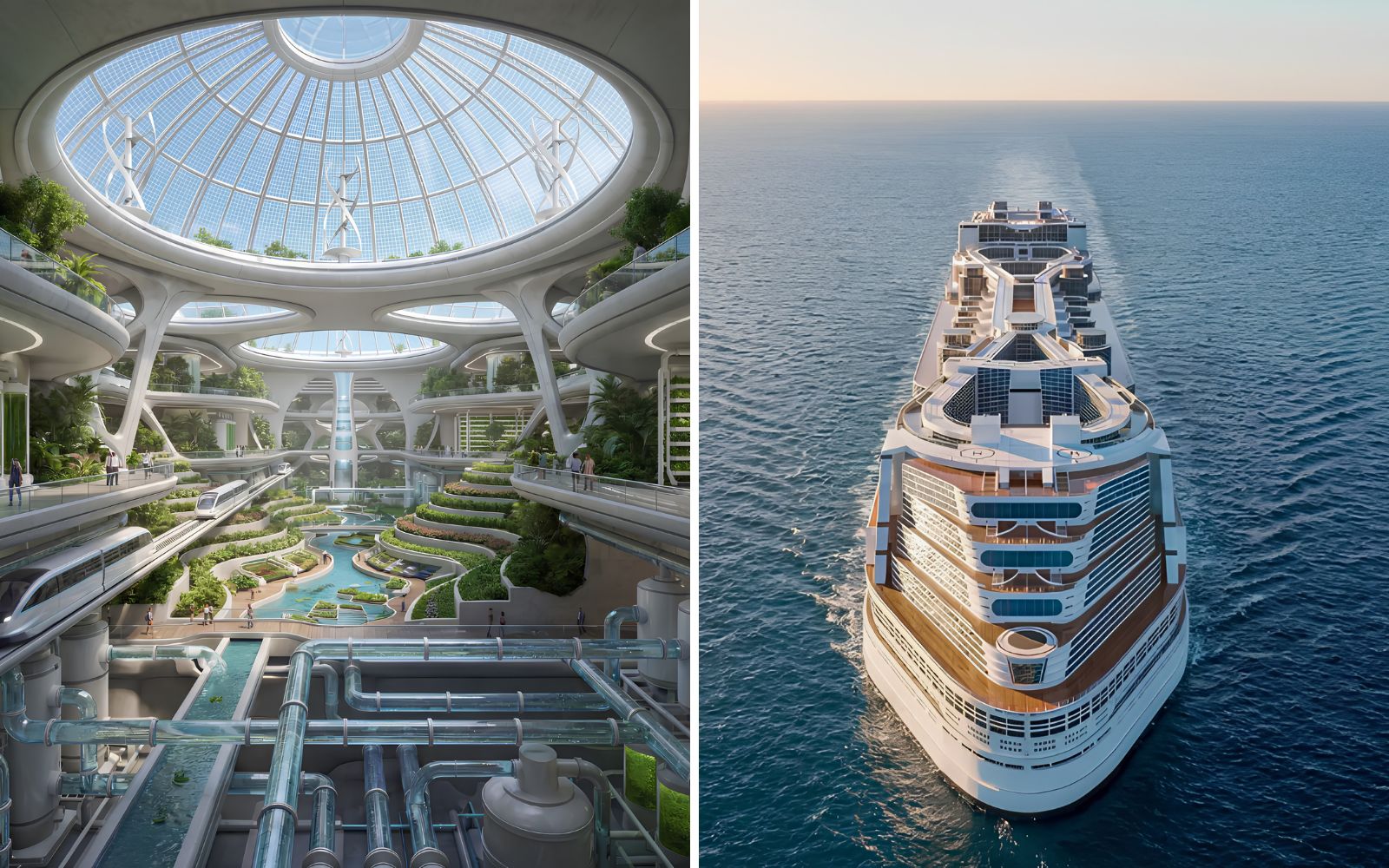
The 4,500-foot nuclear-powered floating city would have a capacity of 80,000 people. But don’t think of it as a cruise ship.
It’s more of a place to live, that just happens to be in the middle of the ocean, as it “continuously circumnavigates the globe”.
The idea is not new. It’s a concept that was first introduced about 30 years ago by a Florida engineer named Norman Nixon.
The 2008 financial crisis put the project on pause, but with new technological advances in both nuclear power and modular engineering, the dream of a mobile ocean city are circulating online once again.
Here is a realistic look at what the developers are actually planning, and how much of it is actually feasible right now.
Video of Freedom Ship
What is Proposed on Board?
If you are expecting to sail right up to port cities, enjoy sailaway parties, and have a non-stop conga line, think again. The Freedom Ship is designed as a self-contained city built on a giant, flat-bottomed steel platform rather than a standard ship hull.
It’s not designed to pull into ports, as there isn’t one big enough to even allow that to happen anyway.
Keep in mind that renderings are just renderings. A brief look at the gallery of proposed spaces on this ship look like they are straight out of sci-fi. But then again, the ships being built today would have been unfathomable 50 years ago.
The blueprints for Freedom Ship resemble a major city neighborhood:
- Residential & Hotel Space: 17,000 separate living units which range from 300-square-foot condos to multi-million dollar luxury suites, alongside 10,000 hotel rooms for rotating visitors.
- A Full School District: Because people would live here permanently, the design includes a full K-12 school system and a college campus so children can attend classes while traveling.
- Commercial Districts: Plans reveal a massive multi-story shopping mall, 3,000 commercial units for independent businesses, a 15,000-seat sports stadium, and a major medical center.
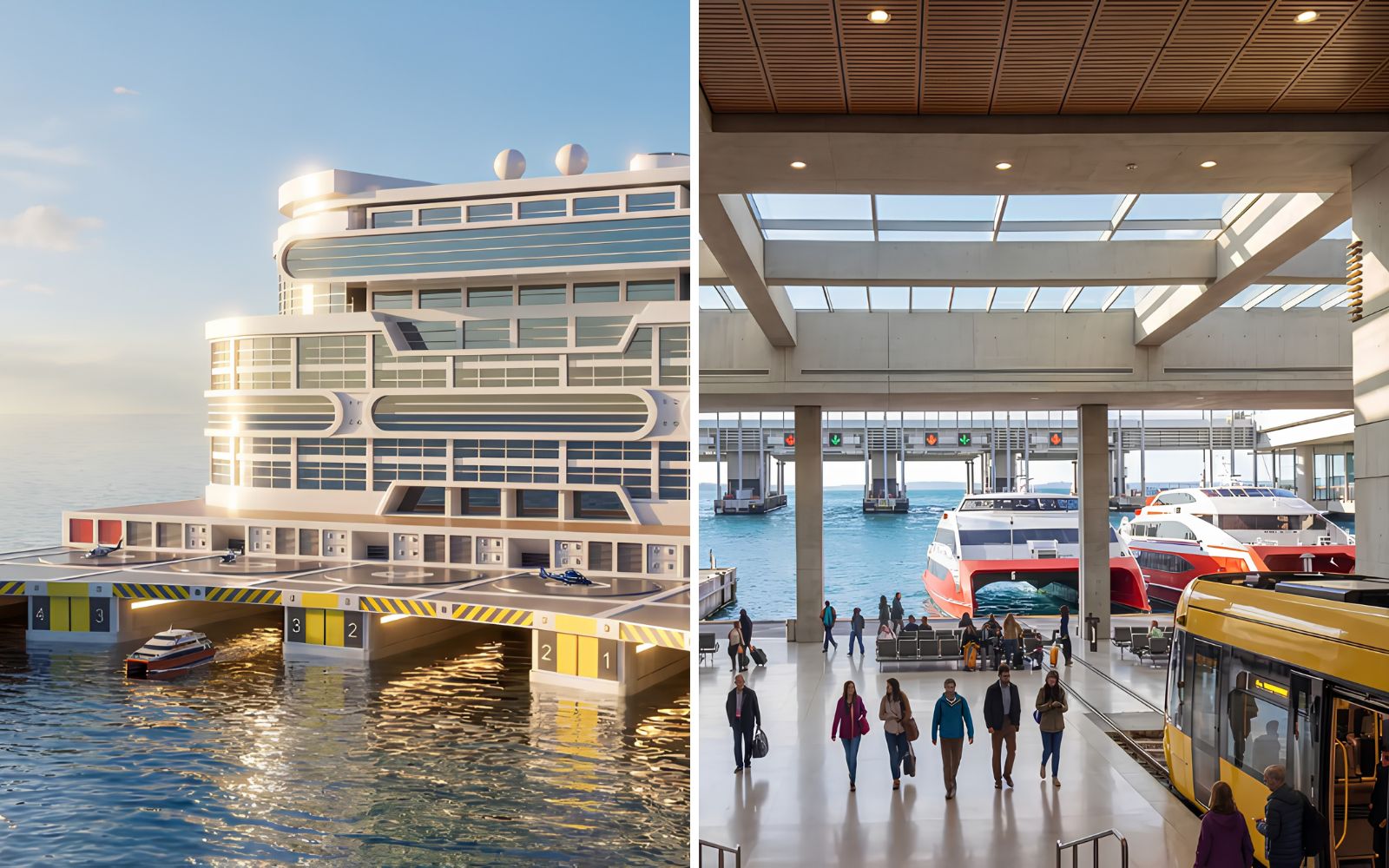
- On-Board Transit: The ship features over 100 acres of open outdoor space, parks, bicycle paths, and an onboard light rail or transit system just to help residents get from one side of the structure to the other.
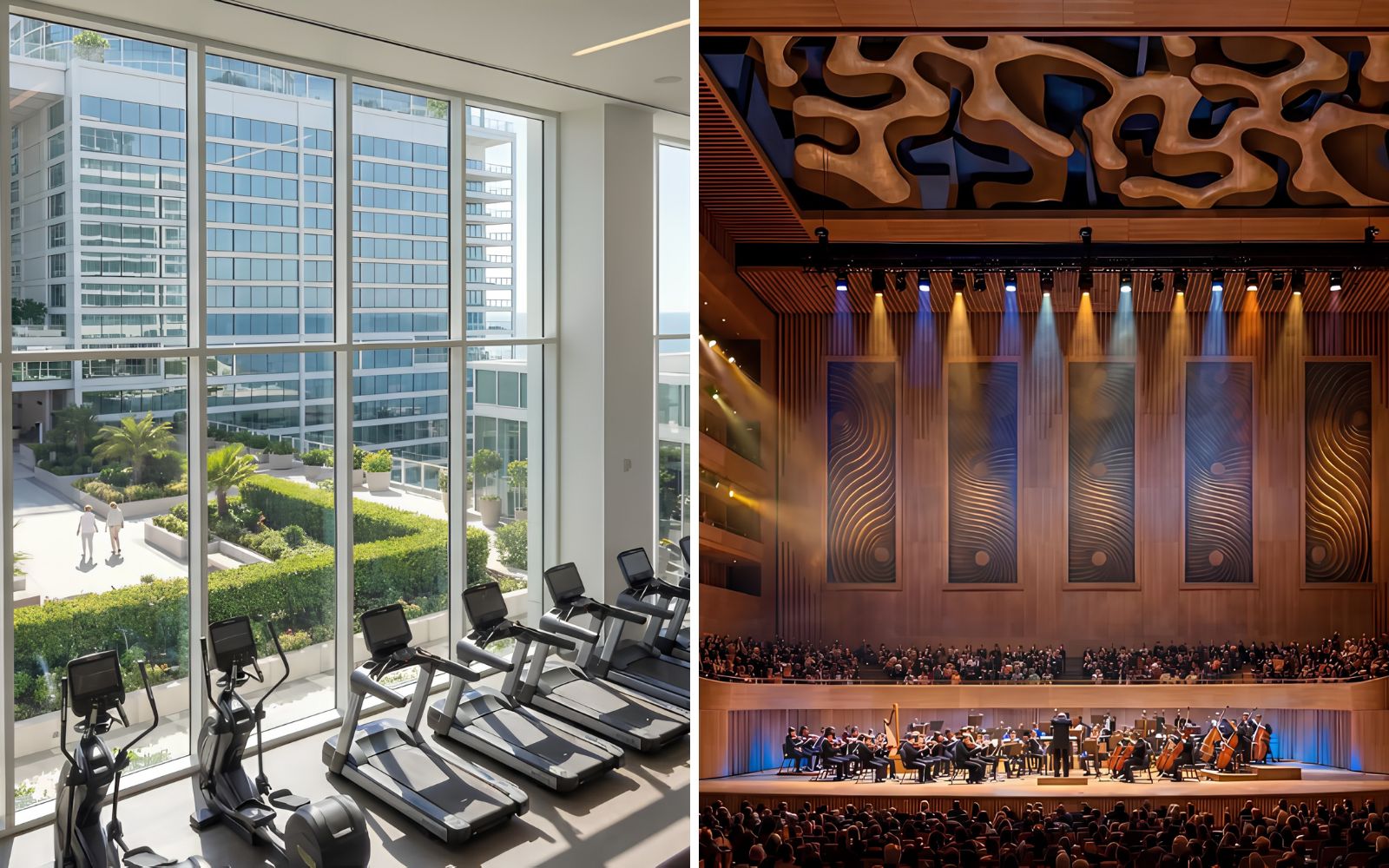
- Entertainment & Nightlife: To keep 80,000 people entertained, the blueprints outline a massive world-class concert hall for live music and theater, multiple movie theaters, and a sprawling, Vegas-style casino.
- Fitness & Recreation: Alongside those top-deck water parks, the plans feature multiple state-of-the-art fitness centers, full-sized gymnasiums, and dedicated sports courts for everything from basketball to tennis.
Most unique of all is the top deck. It is designed as a flat, open runway to host small commercial turboprop aircraft, allowing residents to fly to and from the mainland at will.
You can check out dozens of renderings of the proposed ship and its amenities here.
Why Even Build This?
Why would anyone want to build an 80,000-person island with a propellor? The developers say that this is not meant to be a vacation destination.
According to official statements from the design team:
“Hospitality aboard the Freedom Ship is not conceived as a cruise experience. It operates within the structure of a permanent city—serving visitors, supporting global engagement, and contributing to economic vitality while remaining subordinate to the platform’s primary identity as a place of residence and work.”
The primary driving factor behind the project isn’t leisure. It’s a lifestyle philosophy that has more do with economics in an ever-changing world.
Because the ship is designed to remain permanently offshore in international waters, developers pitch it as a community entirely free from local property taxes, real estate taxes, sales taxes, and import duties.
As the developers note:
“At the core of the vision is permanence. Residents are not passengers. Homes, workplaces, education, healthcare, commerce, and public spaces are integrated into a single platform designed to function continuously over time, supporting real communities rather than temporary populations.”
The ship would slowly circle the globe once every two to three years, anchoring off major international coasts to let businesses trade and residents explore the mainland via ferry or the onboard airstrip.
The Shift to Nuclear Power
A ship of this size requires a ridiculous amount of energy to keep the lights on, run the light rail, and power the propulsion systems.
Traditional heavy fuel oil would be a logistical and environmental nightmare.
That is why modern iterations of the concept lean heavily on Molten Salt Reactors (MSRs).
Unlike older high-pressure nuclear technology, modern MSRs operate at low pressure, meaning there is no risk of an explosive steam blowout. If the ship loses all power, a plug physically melts, and the liquid fuel automatically drains into a secure underground containment structure where it cools into a solid, safe block of rock.
With a nuclear plant on board, the ship could theoretically generate its own electricity, desalinate its own water, and travel the world for up to 15 years straight without ever needing to pull into a port to refuel.
The Reality Check
So, will you be buying an ocean-view condo on this 4,500-foot atomic city anytime soon? Don’t count on it.
The estimated price tag to construct the Freedom Ship sits well north of $10 billion to $14 billion. On top of that, standard shipbuilding techniques cannot easily handle a hull of this size due to the intense structural stress caused by ocean waves, meaning a shipyard would essentially have to invent an entirely new way to build a ship.
That’s probably the biggest obstacle to this entire project right now.
While modern nuclear propulsion solves the ship’s massive energy problem, the project is still very much on the drawing board. For now, the future of cruising will stay focused on standard-sized ships, although a 7,000-passenger ship was not so standard just a few years back.
In this industry, I’ve learned to never say never.
Looking for the Best Cruise Deals?
Search Multiple Sites at Once
Instant Real Time Pricing
Search Now