

Portland, Maine’s City Council is looking into a ban on cruise ship “scrubbers” while the vessels are in port.
The resolution, which will be considered on Monday, would make the popular New England cruise stop the first port in the state to restrict exhaust gas cleaning systems (better known as scrubbers) on visiting cruise ships.
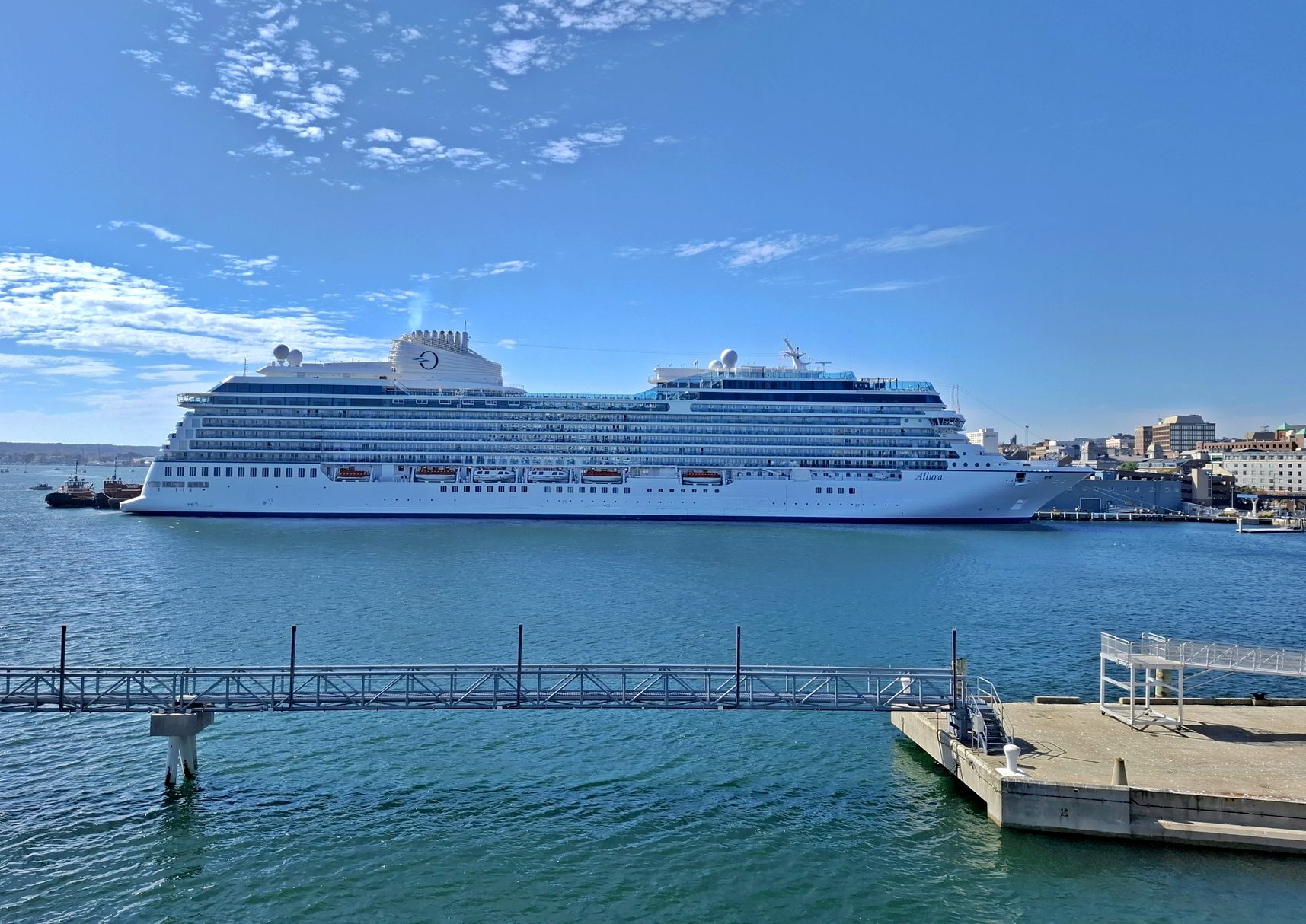
The proposal is backed by local group Portland Cruise Control that has been pushing for the ban for the last two years.
The new rule would ban ships from using scrubbers or discharging scrubber wash water while docked at city-owned piers.
Portland is just winding down its busiest time of year in terms of cruise traffic. While the port has just seen one 3,560-passenger ship (Majestic Princess) in November, its busiest months are September and October.
For September 2027 alone, there are 41 cruise ship calls on the schedule, so this new ruling would definitely impact a lot of potential visits.
If the ban is given the green light, though, supporters say the aim is to protect Casco Bay without cutting ship visits or passenger numbers.
What’s a Scrubber Anyway?
Cruise ships have to meet strict international sulfur limits on exhaust. One way is switching to cleaner (and more expensive) low-sulfur fuel like marine gas oil (MGO).
Another is installing something affectionately known as scrubbers that let cruise ships burn cheaper heavy fuel oil while cleaning the exhaust on the way out.
But not all scrubbers are the same. There are a few types:
- Open-loop scrubbers use seawater to wash sulfur and other pollutants from the exhaust gases, then discharge that wash water.
- Closed-loop systems recirculate treated water and hold it for removal later on.
- Hybrid systems can switch between the two modes.
The kind of scrubbing that is the key focus for Portland, however, is the open-loop scrubbing that discharges the water when the ships are docked.
That wash water can be acidic and can carry polycyclic aromatic hydrocarbons (PAHs), heavy metals, particulates, and other contaminants. Environmental advocates argue that this simply moves air pollution into the water.
JoAnn Locktov of Portland Cruise Control has estimated the ban could keep roughly 32 million gallons of scrubber wash water out of the bay in a season.
“Cruise ships shouldn’t be allowed to turn their air pollution into our water pollution,” she said. “This is about protecting the bay, not reducing cruise visits.”
Other Ports Have Taken Similar Steps
Seattle has already done this. Through a terminal tariff, the Port of Seattle has banned cruise ships from using open-loop scrubbing while at berth.
The port has also used agreements and rules encouraging cleaner operations at the dock. Even with this scrubbing restriction in place, Seattle has seen strong cruise seasons. In fact, Seattle just wrapped up one of their best seasons ever with almost 2 million passengers and 330 ship calls.
Other places with limits on scrubber washing include ports in California, Connecticut, Vancouver (Canada), and a growing list of international ports.
What Cruise Ships Will Do if Measure Passes
The main options for cruise ships while in Portland would include:
- Switching to low-sulfur marine gas oil (or similar compliant fuel) while at berth. This removes the need to run open-loop scrubbers.
- Using closed-loop or hybrid scrubbers in a way that retains wash water in holding tanks instead of discharging it at the dock.
Ships could also just plug into shore power so engines can shut down, but Portland, Maine doesn’t currently have shore power available.
Vote Comes Monday
According to news reports, the resolution will be considered on Monday, November 16. If approved, the tariff rules would be revised, and cruise lines would have to adjust how they handle the exhaust.
Also, if approved, Portland would become Maine’s first port to add these restrictions and it’s possible other East Coast ports would follow suit.
Looking for the Best Cruise Deals?
Search Multiple Sites at Once
Instant Real Time Pricing
Search Now