


The Costa Concordia disaster is back on people’s minds thanks to a new Netflix documentary.
“Shipwrecked: Nightmare at Sea” revisits the 2012 tragedy off the coast of Italy, focusing on the stories of the passengers and the 32 people who tragically lost their lives.
Cruise Fever had just been in existence for about a year when the Costa Concordia tragedy hit the news. I still remember how shattering those images were when they took over about every news story in my feed.
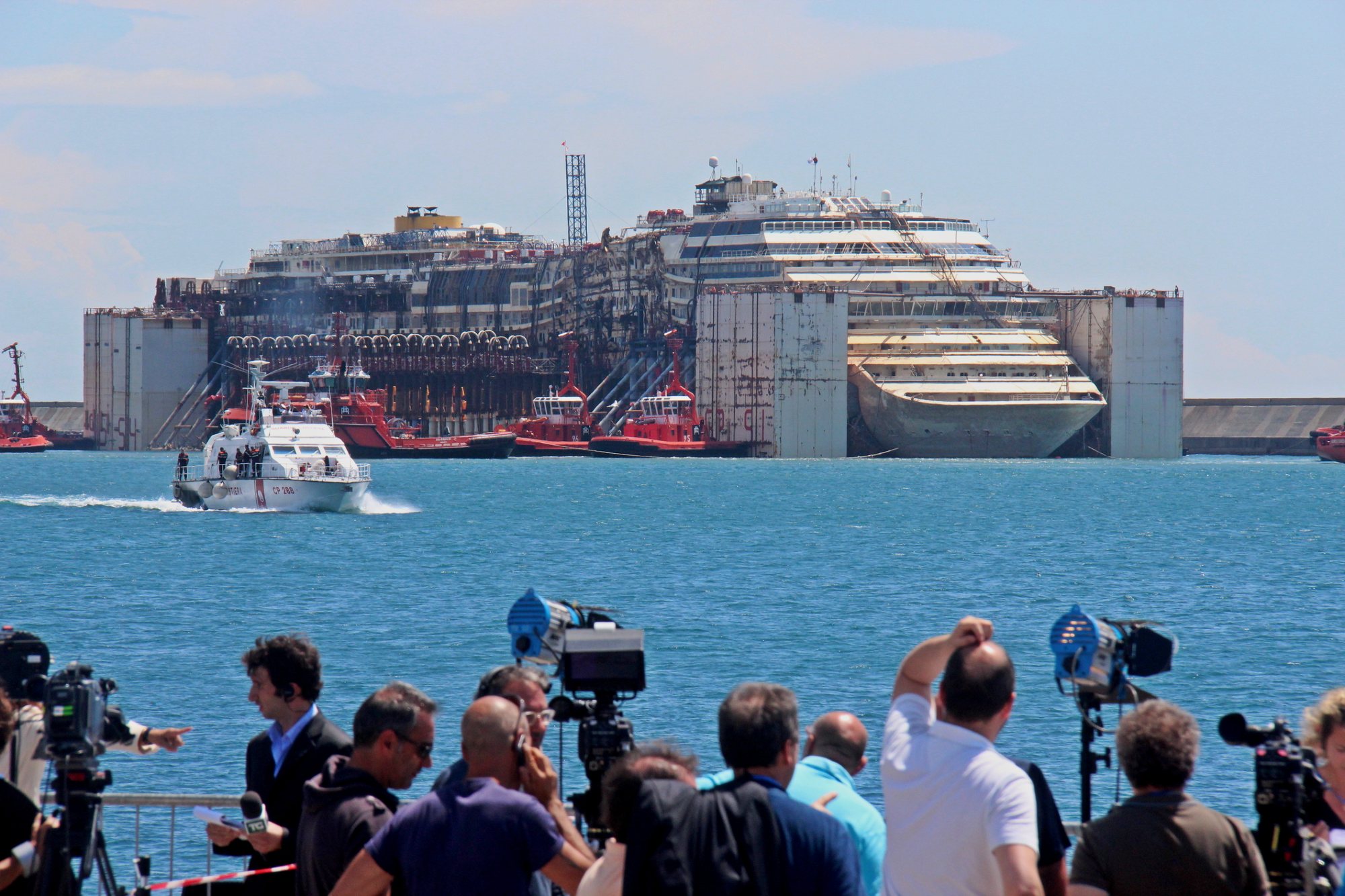
While the documentary centers on the night of the wreck, it also left a lot of viewers wondering about what happened next. The operation to clean up the physical wreckage became a historic engineering project with a huge financial cost.
In fact, it was an engineering project like no other that had ever been done before, so workers had to get creative.
When everything was finished, the total bill to rotate, float, tow, and recycle the Costa Concordia reached about $2 billion.
To put that into perspective, the ship originally cost around $570 million to build in 2006. Cleaning up the wreck cost almost four times what it cost to construct the vessel in the first place.
$2 billion is enough to pay for a brand-new mega ship today. Actually, the most expensive cruise ship ever built had roughly that same price tag.
Breaking Down the $2 Billion Disaster

How does a single cleanup operation balloon to the price of a 7,600-passenger cruise ship? It was not just a matter of hooking up some tow lines.
It was a monstrous, multi-year industrial campaign, and it was driven by legal, environmental, and moral obligations. For many reasons, this was not an easy job.
The total financial aspect of the disaster breaks down like this:
- The Salvage and Rotation: This cost about $1.2 billion. It was the most complex part of the process. Engineers had to build a massive underwater platform, attach giant metal boxes called caissons to the sides of the ship, slowly pull the 114,000-ton vessel upright, and then use those boxes to float the ship back up.
- Towing and Scraping: This cost around $200 million. Once upright, the ship was towed slowly to Genoa, Italy, where specialized teams spent years dismantling and recycling 350,000 tons of material.
- Victim and Passenger Compensation: Costa Cruises paid out around $95 million in total compensation to over 3,500 survivors, crew, and families of the deceased. Most surviving passengers who were not injured accepted a flat-rate deal of about $14,000 to cover lost baggage and trauma, along with refunds.
- Environmental Damage and Legal Fees: The remaining hundreds of millions of dollars went to settle environmental damage claims with the local government of Giglio Island and cover ongoing legal and administrative expenses.
The Delicate Process
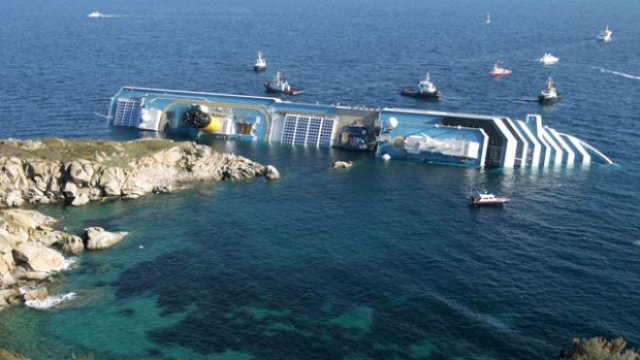
When shipbuilders build a mega ship, they do it in a highly controlled dry-dock environment with gravity on their side. When salvagers had to deal with the Costa Concordia, they were dealing with an unpredictable steel beast resting dangerously on an underwater ledge.
This is where the massive budget came from. It was necessary to prevent a second disaster.
If the ship had slipped off the ledge, it would have plunged into deep water, breaking apart and spilling thousands of tons of fuel, sewage, and chemicals directly into a protected marine sanctuary.
The team could not just cut the ship up on-site. They had to treat the wreck like a delicate, heavily damaged structure, reinforcing it while it was submerged just to keep it from snapping in half during the rotation.
The Wreck vs. The Billion Dollar Club
So, what kind of ship does $2 billion buy you today?
In my article looking at the most expensive cruise ships ever built, we look at the category of ships that crossed the ten-figure threshold during construction.
If you look at that list, you will realize that the money spent on the Costa Concordia cleanup matches the price tag of the most expensive modern cruise ship budgets:
- Icon of the Seas (Royal Caribbean): The largest cruise ship class in the world cost roughly $2 billion to build. Subsequent ships in the class cost about the same.
- Symphony of the Seas (Royal Caribbean): Cost roughly $1.5 billion to build.
- Oasis of the Seas (Royal Caribbean): Cost roughly $1.3 billion to build.
In other words, the money required to clean up the Costa Concordia wreck could have fully paid for the build of Icon of the Seas.
But ultimately, the true price of the Costa Concordia disaster is not measurable in dollar terms. And it shows that when bravado meets a lack of judgment, a single careless decision can cost billions of dollars and change thousands of lives forever.
Looking for the Best Cruise Deals?
Search Multiple Sites at Once
Instant Real Time Pricing
Search Now